Somewhere along the way, we started confusing busyness with purpose — and our bodies have been paying the price ever since.
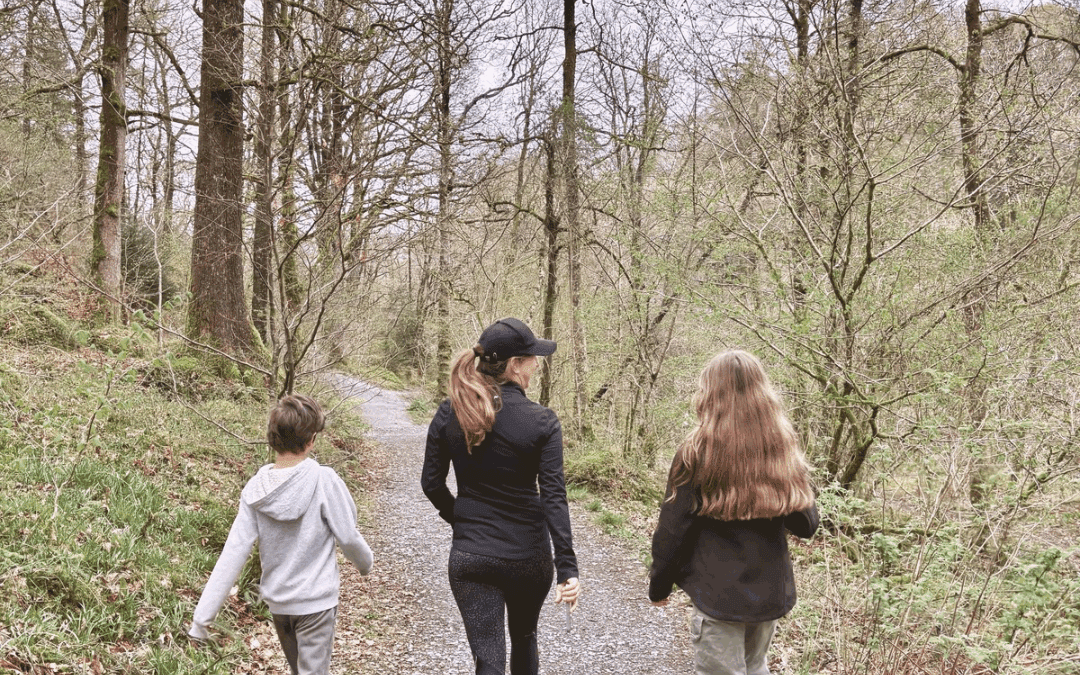
I’m writing this from a quiet house in the Lake District. The kids are outside, climbing rocks and getting muddy — completely in their element. We’ve done a lot of walking, eaten when we’re hungry, and let the days (mostly) unfold without a plan. No screens, no messages to answer, no pressure to be anywhere or do anything.
And in that space, it’s clearer than ever how easy it is to get caught up in constantly doing. But rest isn’t something we earn once everything’s finished — it’s something we need in order to keep going.
The relentless push to perform
In our modern world, being tired has somehow become a badge of honour. We celebrate productivity like a currency, trading our peace of mind for performance. Especially when you’re building a purpose-driven business or raising a family, or both, the drive to keep pushing can feel endless.
My husband knows this too well. He runs his own business and finds it genuinely difficult to switch off, even when we’re supposed to be resting. His thoughts still spin: the next deadline, client problem, missed opportunity. He’s incredible at what he does — driven, dependable — but I see how rarely he lets himself fully unplug. And I see the cost of that, too.
For me, holidays are non-negotiable. They’re not an escape from life, but a return to it. A chance to recalibrate. To slow down enough to feel what we’ve been overriding.
And what becomes crystal clear every time we step away is this: we were never built to operate at full tilt, all the time.
Our brains weren’t designed for constant input
We live in a world of overstimulation. Constant notifications, decisions, noise. And while we adapt on the surface, under it, our nervous systems are running hot. The prefrontal cortex — the part of the brain responsible for decision-making, focus, and planning — fatigues quickly when overloaded. Studies from the University of Michigan have shown that mental fatigue doesn’t just make us feel tired, it actually reduces our cognitive flexibility and emotional regulation.
In short: we become reactive, not reflective.
But the brain doesn’t only suffer in the moment. Chronic stress shrinks the hippocampus, the region of the brain linked to memory and learning, while increasing activity in the amygdala, the fear centre. This means that when we’re constantly switched on, we’re actually training ourselves to live in survival mode.
And this, over time, gets embedded — not just in the brain, but in the body.
The brain on rest
There’s a reason we get our best ideas in the shower or while walking through a forest. According to research from the University of Illinois, the brain’s ability to focus actually diminishes over time without breaks. Taking deliberate pauses enhances creativity, sharpens thinking, and improves memory consolidation.
Neuroscientist Dr. Andrew Huberman also speaks to the power of “non-sleep deep rest” — moments where the nervous system shifts into recovery mode, allowing both the brain and body to restore. It’s in these moments that we integrate what we’ve learned, process emotion, and reconnect with our purpose.
And nature amplifies all of that. Studies from the Journal of Environmental Psychology show that even short periods in natural surroundings can significantly reduce cortisol (the stress hormone), lower blood pressure, and improve mood. This isn’t just anecdotal — it’s measurable.
The body keeps the score — and it learns fast
As Dr. Bessel van der Kolk explains in his groundbreaking book The Body Keeps the Score, the body stores experiences — particularly stressful ones — in physical ways. The nervous system doesn’t just respond to danger; it remembers it. And over time, we become conditioned to stay alert even when we’re safe.
This is the danger of never pausing: we train our systems to exist in a constant low-level fight-or-flight response. Even joy becomes hard to access. Stillness feels unfamiliar. And when we try to rest, we feel uncomfortable — even guilty.
It’s not because we’re bad at relaxing. It’s because we’ve been conditioned out of it.
Our children reflect back what we’ve forgotten
Watching my children here, wandering without a schedule, I can see how quickly they return to a natural rhythm. Their play isn’t structured. They’re not “achieving” anything. And yet they’re learning constantly — about themselves, their surroundings, their own boundaries.
Children don’t need to be taught how to be in their bodies — until we unintentionally teach them not to be.
We reward stillness when it looks like obedience, but we often suppress rest when it looks like daydreaming. We praise busyness. We plan every hour of the day. Slowly, children start to learn that their worth is attached to their output.
And we carry that conditioning into adulthood. We override hunger cues, sleep cycles, and intuition — because there’s always more to do.
Yet neuroscience now confirms that unstructured play and rest are essential for healthy brain development in children. According to the Harvard Center on the Developing Child, the architecture of the brain is built through responsive, stress-free environments. When stress becomes chronic, especially in early life, it literally alters the brain’s wiring — increasing the risk of anxiety, impulsivity, and inflammation later in life.
This isn’t just about parenting. It’s about recognising how rest protects the brain — at any age.
What nature teaches us — if we let it
Here in the Lake District, everything feels slower, older, wiser. Trees don’t force themselves to grow. They root deeply and respond to the seasons. The mountains don’t rush to reach the sky — they simply are, shaped over time by wind and water.
And yet, their presence is powerful.
There’s something deeply regulating about being in nature. It resets the nervous system, shifts the brain into alpha-wave states (linked to relaxation and creativity), and activates the parasympathetic nervous system — the “rest and digest” mode we spend too little time in.
Research from Stanford University has shown that even 90 minutes of walking in nature significantly reduces rumination — those repetitive, negative thought patterns that fuel anxiety and depression.
Being in nature doesn’t just feel good. It’s a biological return to how we were designed to live.
Rest is a discipline — and a responsibility
So why do we resist it so much?
Because it confronts our programming. Rest invites us to feel. To reflect. To sit with the things we’ve kept at arm’s length through busyness. But it’s in that space — uncomfortable as it might be — that insight emerges. That healing begins.
Rest isn’t laziness. it’s leadership.
It’s modelling something different — to our clients, our children, our nervous systems. It’s choosing to live in a way that supports longevity, not just short-term results. It’s understanding that ideas need space to breathe. That clarity requires distance. That integration is just as important as initiation.
When I rest, I come back a better mother. A clearer thinker. A more present guide for the people I serve.
And this is the shift I want more of us to make — especially women, especially leaders:
To stop treating rest as a luxury and start treating it as strategy.
How to practise rest (even when it’s uncomfortable)
Rest doesn’t always mean lying still. It means intentionally stepping away from doing. Here are some ways to begin:
- Tech-free walks: Leave your phone behind. Walk without tracking steps or listening to a podcast. Let your mind wander.
- Unstructured time: Block out space in your week where nothing is planned. No agenda. Let the moment lead.
- Micro-pauses: Throughout the day, close your eyes for 60 seconds. Breathe. Check in with your body.
- Play: Engage in something with no outcome. Paint, dance, explore. Let joy return without purpose.
- Say no: Rest sometimes looks like boundaries. Protect your space like your wellbeing depends on it — because it does.
We weren’t created to be machines. We were created to be. To live in rhythm. To respond to seasons. To grow from rest as much as we grow from action.
So if you’re feeling worn down, disconnected, uninspired — maybe the solution isn’t to push harder. Maybe it’s to pause. Maybe it’s to remember that your worth isn’t measured by how much you do — but by who you are when you’re no longer doing anything at all.
And maybe, just maybe, the most radical thing you can do for your business, your health, and your family… is nothing.